Germans don't want uncontrolled groups accumulating power precisely because it could lead to a situation like Nazi Germany
Uh huh. Really. Germans totally hate uncontrollable groups trying to take over Europe?
Please spare me sanctimonious Germans claiming some sort of moral high ground they don't have. In fact from a British perspective it appears Germany has learned nothing from its experiences at all. It's actually quite amazing how desperate they seem to repeat history over and over.
Germany is by far the biggest and staunchest supporter of the EU, which is literally an uncontrollable group accumulating power as fast as possible. It is partly because of hardline EU supporters like Merkel and Macron that both Switzerland and the UK are hurtling towards all out trade war with the rest of Europe, and why UK/EU talks have gone nowhere. The EU is building its own army, its democracy is a sham and it treats its own citizens with contempt, as can be seen in this remarkable blog post by the Commission (it has to be quoted now because the backlash was so huge it got taken down)
The reason the French and German governments hate Libra is threefold:
1. They are very easily manipulated by their local press barons who perceive Facebook and Google as business threats. See the old link taxes that became Article 13 at the EU level.
2. They are institutionally cynical about their own citizens, who they see deep down as basically being stupid sheep. This shines through in their writings (see the link above) but has the more insidious effect that nobody in EU power structures really believes their own country could ever create a Google or a Facebook. So from their perspective, constantly attacking these firms is pure win: it creates an external enemy in a world without many, and these firms are usable as cash machines to keep the EU budget afloat.
3. One way the EU controls its southern member states is by letting pro-EU governments effectively buy votes by running huge deficits, financed by money printing by the ECB. If a country elects an anti-EU government, the ECB threatens to turn off the money supply until they do (this is very visible in Italy).
In other words the EU's power comes at least partly from manipulating the currency supply. This is bad for the typical German citizen who tries to save money, but good for the project of uniting Europe under a dictatorship:
Germany has recent experience with governments that try to take over Europe and governments that manipulate the money supply for political purposes. Indeed ECB policy is very unpopular with the Bundesbank and German government. But they can't do anything about it because their ideological commitment to EU domination overrules everything else, and the head of the EU Commission controls the ECB.
Ultimately, Germany's experience with hyperinflation, Naziism and the DDR has apparently left it convinced the moral thing to do is support a power structure that's taking over Europe as fast as possible, printing huge sums of money to do so, which is engaged in a power struggle with Britain, and which is run entirely by people who aren't elected.
From my perspective I think the EU/UK talks have gone nowhere because the brexiteers didn't have any strategy at all. It boils down to playing chicken and thinking the rest of the EU will flinch at the threat of the UK cutting all ties, when it has been clear that the UK (under May and now Johnson) desperately wants those ties. But the UK is not willing (or politically able) to make any concessions for those - concessions that other states had to make before, to make the same deal. They're not just selected arbitrarily.
It's tragic really, since the EU cannot move because it's bound to the will of the member states and their people - and the UK cannot move because it's bound to the will of its people (by which I mean the people of Northern Ireland, not the referendum).
Now the UK press seemingly wants people to believe that the "the EU" can just decide on a deal, independent of the interests of its member states. And that sadly will burn itself into the minds of many Brits (at least the leavers) as a story that the EU bullied the UK without any reason, just to be mean.
"The EU" means both the institutions and the whims of a handful of national leaders. Nothing about what it does has anything to do with the will of its people. Where is that even measured? The text of the Withdrawal Agreement was written by the Commission, which controls the negotiations.
And by the way, none of the things the UK is being asked to agree to have been presented as requirements to other countries. The only thing the UK really wants is a free trade deal. That is explicitly not on offer from the EU: ruled out immediately. That's available to countries not geographically near Brussels, but not to the UK.
And that sadly will burn itself into the minds of many Brits (at least the leavers) as a story that the EU bullied the UK without any reason, just to be mean.
The British press, despite what you may believe, is mostly pro-EU. Many Brits have concluded that about the EU all by themselves, based on the actual actions it's taken.
> Many Brits have concluded that about the EU all by themselves, based on the actual actions it's taken.
I don't know how many Brits have reached their conclusions about the EU "all by themselves", without basing their information at all on what the media and UK politicians have told them.
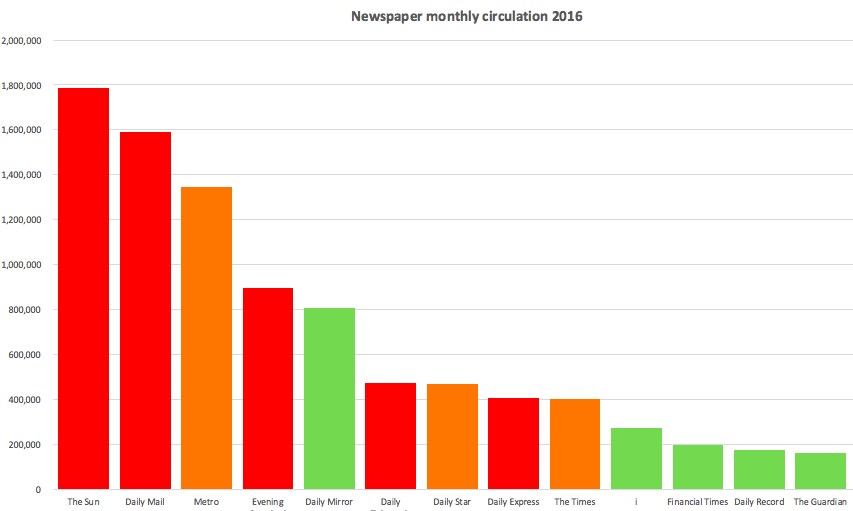
I meant in the sense that most newspapers and media outlets are pro EU. Yes, the few that aren't have higher circulation. You can't easily disentangle cause and effect there though: do people read these papers because they feel they're presenting a more realistic view of the EU/the world, or do they decide what a realistic view is based on the papers they read?
It's also worth remembering that broadcast media is largely pro EU, even though it's theoretically meant to be neutral. I don't know many who really believe it is though.
At any rate, it's very easy to get news very slanted towards the EU in the UK if you want it. The fact that there's alternatives is different to in most of Europe, I've noticed, where the media is near universally pro EU and anti-member state. At most in Germany the ECB gets criticised.
Actually they are much better! Trump ran on an explicitly populist platform ("I listen to you, the elites don't") and Johnson is currently staring down the threat of a jail sentence because he's trying to actually leave the EU, as voters requested. They are much more guided by what's popular with voters than EU leaders are.
And yes I know lots of people living in the EU think it's great. Lots of people living in the USSR thought it was great too, as can be seen from the opinion polls showing how many Russian think Stalin was their greatest leader. That doesn't change the nature of what these systems are.
What Trump ran on and what Trump does are two different things.
And Boris (among many others), more or less engineered the whole brexit so he could gain power, if that fails he is done. He is doing it because he bet his whole career on it, and has nothing to loose.
And as someone who lived (although only for about 12 years of my life) behind iron curtain.
I can assure you most people didn't think it was ok, and we are paying attention so we don't end up in the same situation again.
So Trump ran on basically the same platform as Hitler ("I listen to you! I will fix things and make us great! Other people are bad and a threat to us!") and you think this is better?
Part of what we usually want from our politicians is to filter what people want a little bit and remove some of the evil and stupid. I know, then we don't get exactly what we want. But if you ask exactly what people want, about 90% of it ends up being "people not like me to suffer more", and if you run everything based on that, all you get is everyone suffering more.


Germans don't want uncontrolled groups accumulating power precisely because it could lead to a situation like Nazi Germany
Uh huh. Really. Germans totally hate uncontrollable groups trying to take over Europe?
Please spare me sanctimonious Germans claiming some sort of moral high ground they don't have. In fact from a British perspective it appears Germany has learned nothing from its experiences at all. It's actually quite amazing how desperate they seem to repeat history over and over.
Germany is by far the biggest and staunchest supporter of the EU, which is literally an uncontrollable group accumulating power as fast as possible. It is partly because of hardline EU supporters like Merkel and Macron that both Switzerland and the UK are hurtling towards all out trade war with the rest of Europe, and why UK/EU talks have gone nowhere. The EU is building its own army, its democracy is a sham and it treats its own citizens with contempt, as can be seen in this remarkable blog post by the Commission (it has to be quoted now because the backlash was so huge it got taken down)
https://www.techdirt.com/articles/20190215/18005841607/eu-co...
The reason the French and German governments hate Libra is threefold:
1. They are very easily manipulated by their local press barons who perceive Facebook and Google as business threats. See the old link taxes that became Article 13 at the EU level.
2. They are institutionally cynical about their own citizens, who they see deep down as basically being stupid sheep. This shines through in their writings (see the link above) but has the more insidious effect that nobody in EU power structures really believes their own country could ever create a Google or a Facebook. So from their perspective, constantly attacking these firms is pure win: it creates an external enemy in a world without many, and these firms are usable as cash machines to keep the EU budget afloat.
3. One way the EU controls its southern member states is by letting pro-EU governments effectively buy votes by running huge deficits, financed by money printing by the ECB. If a country elects an anti-EU government, the ECB threatens to turn off the money supply until they do (this is very visible in Italy).
In other words the EU's power comes at least partly from manipulating the currency supply. This is bad for the typical German citizen who tries to save money, but good for the project of uniting Europe under a dictatorship:
https://www.theguardian.com/business/2019/sep/08/europe-cent...
Germany has recent experience with governments that try to take over Europe and governments that manipulate the money supply for political purposes. Indeed ECB policy is very unpopular with the Bundesbank and German government. But they can't do anything about it because their ideological commitment to EU domination overrules everything else, and the head of the EU Commission controls the ECB.
Ultimately, Germany's experience with hyperinflation, Naziism and the DDR has apparently left it convinced the moral thing to do is support a power structure that's taking over Europe as fast as possible, printing huge sums of money to do so, which is engaged in a power struggle with Britain, and which is run entirely by people who aren't elected.