They created https://cheeaun.life, a timeline of their life, more than 10 years ago (which looks to be kept up to date), which was my inspiration for markwhen (https://markwhen.com).
Thanks for your work, it's very inspiring to see what one person can achieve on their own, compared to inefficient whole teams that cost 2 million euros to a public agency for a basic transport map.
I've been trying to figure out some security problems that are a result of this CORS policy - as I'm considering it for my own application - and I can't figure out how an attack could actually work.
The API I'm working with uses Authorization: Bearer tokens, and only allows incoming requests with a valid API token.
It's pretty good - mostly become my daily driver for my Akkoma instance (and occasional use of GotoSocial accounts.) Doesn't understand posting the Markdown content type which means I have to keep Mangane around for now. Occasionally loses connection to the backend but I'm putting that down to Apple Private Relay shenanigans (which causes other weirdness for me and Safari.)
Those files are ES modules served (at least to my Firefox) over HTTP/3 with unique filenames and a max-age=604800 cache header, so I don't think that's any less efficient than if they were served as a single bundle.
This means that if any of those individual files are updated in the future just that file will need to be re-fetched, with all of the others staying served from cache. A single bundle would need to be fetched in its entirety on any change.
Activitypub which, mastodon is based on, requires active cryptographic signature of everything. It's why there will probably never be a truly minimalistic mastodon client and they'll all be bloated javascript (or otherwise) applications and not minimalistic HTML elements doing POSTs/etc. This choice has made it irreducibly complex and heavy.
Yes, this is the type of blinders on thinking that activitypub users sometimes have. Take them off and look at a real minimalistic protocol like webmention https://www.w3.org/TR/webmention/https://indieweb.org/Webmention . It is possible to send and receive without any complex application at all.
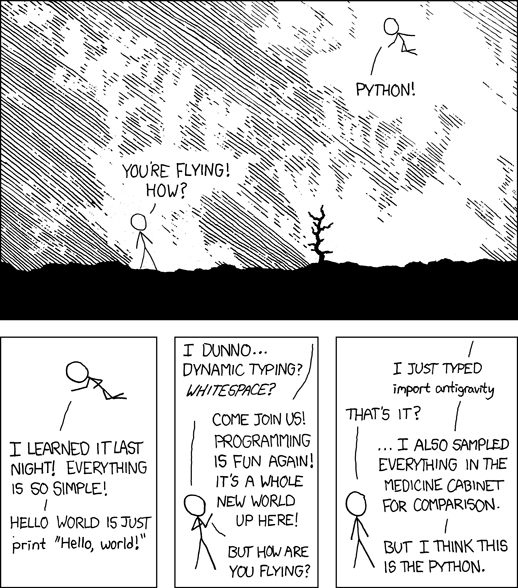
Also, it's weird that you say I'm "completely wrong" given the uncontroversial single claim I made about the cryptographic signing being what makes it complex. Since you wrote a client you have to know this is true even if you disagree with the 'complex' bit. Unless you just used a module that did it for you? https://imgs.xkcd.com/comics/python.png
No, it uses Mastodon's API. Can't log in with Threads, but you can follow some Threads account from Mastodon; "Known Limitations" section here https://www.augment.ink/threads-on-mastodon/
it doesn't show instance names (or usernames if they match the friendly name), it doesn't show threads out of order, it collapses hashtags and makes them less dark, it hides all the interaction buttons unless you click through to the post itself...
This is all pretty minimal, and it's opinionated because it both doesn't look or feel like "social" media, it looks more like an RSS feed or something; and it goes against the design decisions of federation (that full instance names should be displayed, for instance).
Everything that is hidden when large numbers of posts are displayed appears when a single post is focused on. Raw Mastodon will show a hundred different notifications for the same post. Phanpy groups them. If this goes against "the original design decisions of federation" then those decisions are broken. Less clutter and a more compact feed improves usability.


They created https://cheeaun.life, a timeline of their life, more than 10 years ago (which looks to be kept up to date), which was my inspiration for markwhen (https://markwhen.com).